
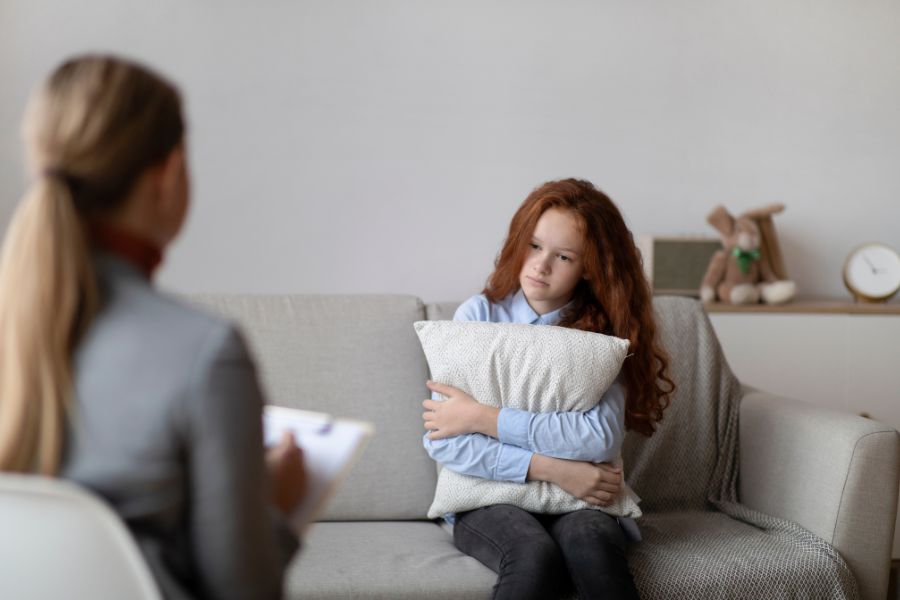
Children and teens experience worry and fear as a normal part of growing up. A younger child may feel nervous about starting school, while a teen may stress about friendships or exams. These everyday worries are part of healthy development, helping young people learn, adapt, and grow.
But sometimes, anxiety goes beyond what is typical. It can feel overwhelming for children, persistent over time, and begin to interfere with daily life, school, friendships, hobbies, or family routines. As a parent or caregiver, noticing the signs early and offering support can make a huge difference in your child’s emotional well-being. This guide will help you identify anxiety, understand what’s behind it, and know when to reach out for professional help.
What Is Anxiety?

Anxiety is the body’s response to new experiences, stress or uncertainty. It is completely natural and healthy to feel some amount of anxiety. It’s the mind’s way to signal your body that something requires extra attention. Children and teens having some anxiety may help them make thoughtful and guided decisions in their life.
A small amount of anxiety is expected at certain stages of development and can even be healthy. However, it becomes a concern when it starts to interfere with a child’s ability to enjoy life, participate in everyday activities, or manage their emotions comfortably. Specifically, anxiety is worrisome when it is:
- Frequent and intense, even in everyday situations: If a child constantly worries about things that seem minor like going to school, speaking in class, or attending a birthday party. These persistent worries can be exhausting for a child and for the family.
- Persistent over several weeks or months: While temporary stress is common, anxiety that continues for weeks or months may signal that a child is struggling to cope. Chronic anxiety can gradually affect confidence, self-esteem, and overall emotional health if not addressed.
- Affecting school, friendships, sleep, or family life: Anxiety becomes particularly concerning when it starts to disrupt daily life. These disruptions can create a cycle where anxiety worsens because the child feels unable to participate fully in their daily activities.
Why Anxiety Happens in Children and Teens

Anxiety doesn’t happen for just one reason. Usually, it develops from a combination of factors biological, environmental, and personal.
Biological and Genetic Factors
Some children are naturally more sensitive or cautious. Anxiety can run in families, so children with relatives who experience anxiety or mood disorders may be more vulnerable. Differences in brain chemistry and nervous system sensitivity also play a role.
Environmental and Social Stressors
Life events can affect children’s emotional health:
- School pressures and expectations around grades
- Friendships and social challenges, including bullying
- Family changes, such as divorce, moving house, or the loss of a loved one
Even positive changes like starting a new school can trigger anxiety if children feel uncertain or unsupported.
Developmental and Personal Factors
Personality traits can also influence anxiety. Children who are perfectionists, highly empathetic, or eager to please may be more likely to internalize stress. Teens face additional pressures around identity, independence, and social comparison, which can intensify anxious feelings.
Recognizing Anxiety in Children

Younger children face difficulty expressing their feelings like adults. They may not understand their feelings fully. Especially feelings like anxiety where everything feels confusing and overwhelming. Instead of saying they feel stressed or worried they may express their fear through other changes in their social behaviour or show physical symptoms or through their emotional reactions. Paying attention to these signals can help parents recognize when a child may be struggling and needs extra support.
Emotional and Behavioral Signs
- Frequent worrying about school, safety, or the future: Children with anxiety may worry excessively about everyday situations, such as schoolwork, friendships, or whether something bad might happen. These worries often seem bigger than the situation itself and may come up repeatedly, even after reassurance.
- Needing constant reassurance: Anxious children may repeatedly ask questions like “Will you stay with me?” or “What if something goes wrong?” This need for reassurance helps them feel safe in the moment, but the worry often returns soon after.
- Irritability, tearfulness, or tantrums: Anxiety can be emotionally exhausting. When children feel overwhelmed, they may become easily frustrated, cry more often, or have emotional outbursts. These reactions are not intentional misbehavior but a sign that the child is struggling to cope with strong feelings.
- Avoiding activities or social situations: Children may begin to avoid things that trigger anxiety, such as school, playdates, birthday parties, or extracurricular activities. While avoidance may reduce anxiety temporarily, it can limit a child’s experiences and increase fear over time.
Physical Symptoms
- Stomachaches, headaches, or other unexplained aches: Anxiety often shows up in the body. Children may frequently complain of physical pain without a clear medical cause, especially before school or stressful events.
- Fatigue or restlessness: Ongoing worry can drain a child’s energy or, in some cases, make it hard for them to sit still and relax. They may seem tired during the day or constantly “on edge.”
- Trouble falling or staying asleep: Anxious thoughts often become louder at bedtime. Children may have difficulty falling asleep, wake up frequently, or seek comfort from parents during the night.
- Changes in appetite: Anxiety can affect eating habits. Some children may eat less due to nervousness, while others may seek food for comfort, leading to noticeable changes in appetite.
Social and School Indicators
- Difficulty separating from parents: Separation anxiety can make it hard for children to say goodbye, even in familiar settings like school or daycare. They may cling, cry, or become distressed when a parent leaves.
- Reluctance to participate in class or group activities: Anxious children may avoid speaking in class, participating in group work, or joining activities where they feel exposed or fear making mistakes.
- Drop in school performance: Anxiety can interfere with concentration, memory, and confidence. As a result, children may struggle academically, even if they previously did well.
- Frequent visits to the school nurse: Repeated trips to the nurse with vague physical complaints can sometimes be a sign of underlying anxiety, particularly if they occur during stressful parts of the school day.
By noticing these patterns and responding with patience and understanding, parents and caregivers can take an important first step toward helping their child feel safe, supported, and understood.
Recognizing Anxiety in Teens

Recognising anxiety in teens can be even more difficult than in children. Teens go through rapid social, physical and hormonal changes. They may not feel comfortable talking about their feelings. Many teens feeling anxious prefer withdrawing themselves from the people around them than asking for help. As a result, anxiety may show up through subtle behavioral changes, or unhealthy coping patterns.
Understanding these signs can help parents and caregivers offer support before anxiety becomes overwhelming.
Behavioral Changes
- Avoiding social activities or isolating themselves: Teens may begin withdrawing from friends, skipping social events, or spending excessive time alone. This avoidance often stems from fear of judgment, embarrassment, or not fitting in.
- Sleeping too little or too much: Anxiety can disrupt sleep patterns. Some teens struggle to fall asleep due to racing thoughts, while others may sleep excessively as a way to escape emotional stress.
- Mood swings or irritability: Anxiety can make teens feel constantly on edge. Small frustrations may lead to outbursts, irritability, or emotional shutdown, which can sometimes be mistaken for typical teenage behavior.
- Losing interest in hobbies they once enjoyed: Activities that once brought joy sports, music, or spending time with friends may start to feel overwhelming or exhausting, leading teens to disengage.
Academic and Social Pressures
- Perfectionism and fear of mistakes: Anxious teens may set unrealistically high standards for themselves. Even minor mistakes can feel devastating, causing stress, procrastination, or avoidance of assignments.
- Difficulty concentrating: Constant worry can make it hard for teens to focus in class or complete homework. This can result in frustration and declining academic performance, even when they are trying their best.
- Anxiety related to social media or peer comparison: Social media can amplify anxiety by encouraging constant comparison. Teens may feel pressure to look a certain way, achieve more, or appear “perfect,” which can worsen feelings of inadequacy and stress.
Unhealthy Coping Strategies
- Avoidance and emotional withdrawal: Instead of facing anxiety-provoking situations, some teens cope by avoiding them altogether. While this may provide short-term relief, it often increases anxiety over time.
- Excessive screen time: Teens may use phones, gaming, or social media to distract themselves from anxious thoughts. While occasional distraction is normal, excessive use can interfere with sleep, relationships, and emotional regulation.
- Riskier coping behaviors: In some cases, teens may turn to substances or other risky behaviors to numb their anxiety. These behaviors are often signs of distress and a need for support, not rebellion.
Teens may not openly say they are anxious, but changes in mood, behavior, or daily habits often tell the story. Early understanding and gentle support can help adolescents learn healthy coping skills and build resilience during this important stage of life.
How Parents and Caregivers Can Support Anxious Children and Teens

Supporting a child with anxiety is about creating a safe, understanding, and structured environment.
1. Open, Compassionate Communication
- Encourage your child to share their feelings without judgment
- Validate emotions rather than dismissing fears
- Ask gentle, open-ended questions like, “What feels hard for you today?”
2. Healthy Daily Routines
- Consistent sleep schedules
- Balanced nutrition and physical activity
- Predictable routines to help children feel secure
3. Coping Skills
- Simple deep-breathing exercises
- Mindfulness or grounding activities
- Helping your child label emotions and problem-solve
4. Balance Reassurance and Independence
While comfort is important, over-reassurance can unintentionally reinforce anxiety. Encourage small steps toward independence and celebrate successes, no matter how minor.
5. School and Community Support
Teachers and school counselors can help by providing accommodations, check-ins, or structured plans to reduce stress. Community activities can also help children build confidence and social skills.
Red Flags That Require Immediate Attention
Seek help promptly if a child or teen:
- Talks about self-harm or suicide
- Withdraws completely from family and friends
- Experiences severe panic attacks or intense fear episodes
- Has major changes in sleep or appetite
Early intervention ensures your child gets the support they need before anxiety escalates.
Supporting Your Child with Compassion
Anxiety is common among children and teens but with understanding, patience, and early support, it can be managed successfully.By recognizing the signs and responding with compassion, parents and caregivers can help children feel safe, understood, and empowered. Gentle guidance, healthy routines, and professional support when needed give children the tools to cope with anxiety and thrive emotionally.
At The Help Clinic, we are here to walk alongside families, offering evidence-based, compassionate care tailored to each child’s needs. If you notice anxiety affecting your child or teen, reaching out for help is a brave and positive first step. You don’t have to face it alone and neither does your child.